Field workers have always needed technology that can survive tough environments. Today, however, durability alone isn't enough.
Whether it's utilities, emergency services, mining, logistics or field service, mobile workforces are increasingly expected to capture more data, access cloud applications, collaborate in real time and support AI-enabled workflows without sacrificing reliability.
That's changing what organisations should expect from rugged devices.
"We're seeing customers ask different questions today," says Dave Smith, Area9. "It isn't simply about whether a device can survive a drop. They're looking at productivity, connectivity, security and how technology supports people throughout an entire shift."
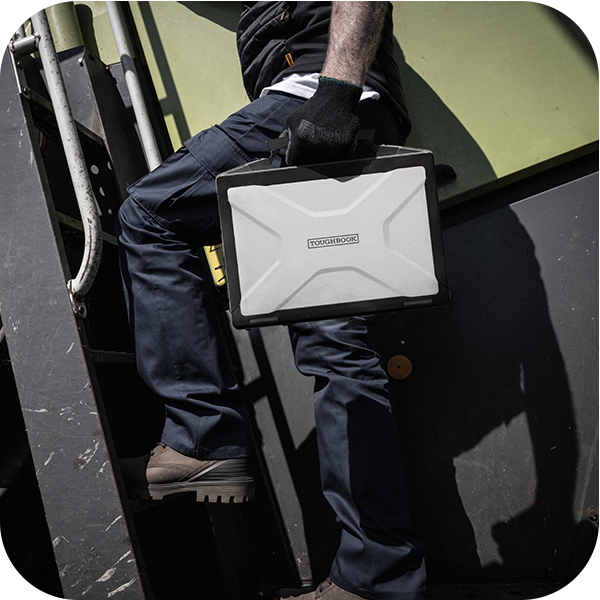 The latest Panasonic TOUGHBOOK 56 MK1 reflects that shift.
Rather than focusing purely on rugged credentials, Panasonic has designed the device around the everyday experience of field workers. Features such as the new ErgoGrip handle, latch-free one-handed opening and improved touchpad might sound like small changes, but they remove friction for workers who spend hours using their device in demanding environments.
It's a reminder that good mobility isn't just about hardware. It's about designing technology around the way people actually work.
Battery life is another example. For organisations running multiple shifts or working in remote locations, stopping to recharge can be more than an inconvenience. With hot-swappable dual batteries providing up to 24 hours of operation, the TOUGHBOOK 56 MK1 is designed to keep teams productive without interrupting critical work.
Connectivity has become equally important. As organisations continue investing in cloud platforms, edge computing and AI-enabled applications, field devices need to remain securely connected wherever work happens. Support for Wi-Fi 7, Bluetooth 6 and optional 4G helps ensure teams can continue accessing business systems even outside traditional office environments.
Security is also becoming a larger consideration as more operational data is generated in the field. Built on Microsoft's Secured-Core PC architecture and powered by Intel Core Ultra Series 2 vPro processors with integrated AI capabilities, the platform provides organisations with a modern foundation for today's workloads while preparing for future requirements.
"The conversations we have with customers are becoming much broader than device specifications," says Dave Smith. "Organisations want technology that supports operational resilience, reduces downtime and gives their teams confidence that the tools they're using won't let them down when they're needed most."
Of course, ruggedness still matters.
With IP53 protection, MIL-STD-810H certification and a lightweight 2kg design, the TOUGHBOOK 56 MK1 continues Panasonic's long-standing reputation for devices built to perform in challenging environments.
But perhaps the biggest story isn't the rugged rating.
It's how rugged technology itself is evolving, from equipment designed simply to survive harsh conditions into intelligent mobile platforms that help organisations work smarter, stay connected and prepare for what's next.
Interested in learning whether the Panasonic TOUGHBOOK 56 MK1 is the right fit for your field workforce? Speak with the mobility specialists at Area9 to discuss the requirements of your environment and operational teams.